
Last Updated on August 20, 2026 by
Follow QSE Academy on Google
Add us as a preferred source to see our ISO and compliance articles more often in your Google results and Discover.
hide
Making Sense of ISO/IEC 17025
I’ve met dozens of lab managers who tell me the same thing: “I get what ISO 17025 wants me to do—but those terms are impossible to understand.”
And they’re not wrong. Between “measurement uncertainty,” “traceability,” and “impartiality,” it can sound like another language entirely.
Here’s the thing — once you understand what these terms actually mean, the whole standard becomes clearer. ISO 17025 isn’t meant to confuse you; it’s meant to guide you toward reliable, defensible test results.
I’m an ISO 17025 consultant who’s helped labs across industries—chemical testing, calibration, medical, food analysis—achieve accreditation. Over time, I’ve learned that simplifying the language of ISO 17025 is often what helps teams finally get it.
So in this guide, we’ll translate the complex vocabulary into plain English. By the end, you’ll:
-
Understand what each key term really means in your day-to-day lab work.
-
Avoid the common misinterpretations that cause audit findings.
-
Communicate clearly with assessors and accreditation bodies.
This isn’t theory—it’s based on what I’ve seen work for real laboratories preparing for ISO 17025 assessments.
Understanding ISO/IEC 17025 — The Foundation
Before we jump into the glossary itself, it helps to get clear on what ISO/IEC 17025 actually is and why its terms matter so much.
Here’s what I’ve noticed in almost every lab I’ve worked with: teams often think ISO 17025 is just a stack of documentation. But that’s not the point. The real goal of the standard is confidence — proving that your lab’s results are technically valid, consistent, and impartial.
Think of ISO 17025 as your lab’s credibility passport. It tells clients and regulators, “You can trust our data.”
And every term in the standard—from “calibration” to “traceability”—exists to protect that credibility.
In my experience, once a team truly understands the vocabulary, everything else—procedures, policies, audits—starts falling into place.
Here’s a quick breakdown to set the stage:
-
ISO/IEC 17025 — The international standard that specifies general requirements for the competence of testing and calibration laboratories.
-
Accreditation — Formal recognition that your lab meets those requirements.
-
Assessor — The person (usually from an accreditation body) who checks whether your lab truly complies.
This is important because many labs spend months building systems without ever pausing to make sure everyone understands these basic terms. When that happens, confusion creeps in—and confusion leads to nonconformities.
So now that we’ve grounded ourselves in what ISO 17025 really means, let’s dive into the terms you’ll use every day.
Core Terms Explained — Management & Technical Requirements
When you start working toward ISO/IEC 17025 accreditation, you’ll quickly notice two big categories of requirements: management and technical.
Both matter, but in different ways — management keeps your system organized, and technical requirements prove your competence.
Here’s what I’ve seen happen often: labs nail the technical part but struggle with the management side—or the other way around. The key is balance.
Let’s unpack the essential terms you’ll hear over and over.
Management Terms (The Backbone of Your System)
-
Management System
Simply put, this is how your lab operates. It’s the structure that keeps everything—from documents to staff responsibilities—under control.
Pro Tip: Keep your system simple. Don’t overcomplicate it with 100-page manuals no one reads. -
Nonconformity (NC)
A fancy way of saying, “something didn’t go as planned.” Maybe a calibration wasn’t recorded properly or a sample was mislabeled.
The point isn’t to panic—it’s to fix the issue and prevent it from happening again.
Common mistake: Treating nonconformities as failures. They’re actually opportunities for improvement. -
Corrective Action
This is your response to a nonconformity. It’s not just a quick fix—it’s figuring out why it happened and making sure it doesn’t repeat.
For example, if temperature records were missing, the corrective action might be to retrain staff or automate the logging process.
Technical Terms (Where Accuracy Matters)
-
Measurement Uncertainty (MU)
Every measurement has a margin of doubt. MU quantifies that doubt.
In plain English: it tells you how sure you are about your result.
Example: If your balance shows 100.00 g ± 0.02 g, that ± 0.02 g is your uncertainty. -
Traceability
This is your proof that a measurement is linked to a national or international standard through a documented chain of calibrations.
Think of it like a family tree for your instruments—all the way back to a “parent” reference standard. -
Calibration
Checking that an instrument gives results within the required accuracy.
Pro Tip: Don’t confuse calibration with adjustment. Calibration checks performance; adjustment changes it. -
Validation vs. Verification
-
Validation confirms your method works for its intended use.
-
Verification ensures it meets specific requirements.
In short: validation is proving it works, verification is checking it’s right.
-
Real Example:
A food testing lab I worked with used a new moisture analyzer without validating it. During the audit, the assessor asked for proof that it was suitable for their product type—they didn’t have it. That simple gap delayed their accreditation by two months.
These core terms shape almost every clause of ISO 17025. Once your team speaks this language fluently, everything from internal audits to assessor interviews becomes smoother.
Now that we’ve nailed down the key technical and management terms, let’s move to how documentation fits into all this—it’s the glue that holds your system together.
Documentation Terminology — Policies, Procedures & Records
If there’s one area that consistently trips up laboratories, it’s documentation. ISO/IEC 17025 requires you to say what you do and prove you did it. Simple in theory—but not always in practice.
In my experience, labs often overcomplicate this part. They create massive manuals, duplicate forms, and end up confusing their own teams. Good documentation should make life easier, not harder.
Let’s break down the main terms you’ll see under the documentation requirements.
Policies, Procedures, and Records — The Core Trio
-
Policies
These are your commitments. They explain what your lab believes and why. For example, a Quality Policy might state your lab’s commitment to impartiality, accuracy, and continuous improvement.
Policies set the tone—they’re the “why” behind your processes. -
Procedures
These describe how things are done. Think of them as the roadmap for your daily lab work—how you calibrate, test, record, and report results.
A good procedure is clear enough that any trained staff member could follow it without confusion. -
Records
These are the proof that you followed your procedure. In other words, they’re your evidence. Test reports, calibration certificates, equipment logs—all of these are records.
One of the best ways to stay audit-ready is to keep records consistent, dated, and signed by authorized personnel.
Document Control
This is where many labs stumble. Document control means making sure everyone is always using the latest version of each document.
It also means old versions are removed or clearly marked as “obsolete.”
The goal isn’t bureaucracy—it’s to prevent errors that come from outdated instructions.
A calibration form from last year with different tolerances? That’s an easy way to fail an audit.
Pro tip from experience: maintain a Document Register. It doesn’t have to be fancy. A simple spreadsheet listing the title, version, date, and owner is enough to keep things organized.
Example from the Field
A small calibration lab I worked with once had three versions of the same equipment list circulating. During their audit, the assessor noticed inconsistencies between versions. It wasn’t a major nonconformity—but it was enough to create doubt about their system’s control.
Once we centralized their documents with proper version control, their next audit was clean.
Accreditation & Audit Terms — How Assessors Interpret Them
Once your management system is in place, the next big step is accreditation. This is where the language changes a little — suddenly, you’re talking about “assessors,” “scopes,” and “proficiency testing.” Understanding these terms makes the whole audit process smoother and a lot less stressful.
I’ve sat through enough ISO 17025 assessments to know that many nonconformities don’t happen because labs are doing things wrong — they happen because labs misunderstand what assessors mean by certain words. Let’s fix that.
Accreditation
Accreditation is the official recognition that your laboratory meets ISO/IEC 17025 requirements. It’s not a one-time approval; it’s an ongoing confirmation that your system works and your staff are competent.
Think of it as your lab’s professional license — it proves to clients, regulators, and stakeholders that your results can be trusted.
Assessor
An assessor is the professional who reviews your system during the accreditation process. They’re not there to catch you out; they’re there to confirm that your methods, equipment, and staff meet the standard.
In practice, the best assessments feel like a technical conversation, not an interrogation.
One thing I always tell my clients: assessors respect honesty. If you don’t know something during an audit, it’s better to say, “I’m not sure, but here’s how we handle it,” than to guess.
Scope of Accreditation
Your scope defines what your lab is officially recognized to do. It lists the tests, calibrations, and parameters covered under your accreditation.
Every detail matters here — from the methods used to the range and units of measurement.
A common mistake I’ve seen: labs write vague scopes like “chemical testing.” Assessors want specifics — which chemicals, which methods, what ranges. The clearer your scope, the stronger your credibility.
Proficiency Testing (PT)
This term often raises eyebrows. In simple terms, proficiency testing is an external check to see if your lab’s results match those of other labs doing the same tests. It’s proof that your results are not just internally consistent, but also externally valid.
For example, if your lab measures the lead content in water, you’ll receive blind samples and submit your results to a PT provider. If your results align with the reference values, you’re on track.
It’s one of the most objective ways to demonstrate technical competence.
Example from the Field
I once worked with a materials testing lab that thought their “scope” was just an internal document. They didn’t update it after adding new test methods. During the reassessment, the assessor flagged it immediately.
It wasn’t that their methods were wrong—it was that their scope no longer reflected reality.
After aligning their scope with their actual activities, their next audit went smoothly, and they even expanded their accredited range.
Risk & Impartiality Terminology — Maintaining Credibility
If there’s one thing ISO/IEC 17025 takes seriously, it’s trust.
And trust in a lab isn’t just about getting accurate results—it’s about showing that nothing (and no one) influences those results unfairly. That’s where risk and impartiality come in.
In my experience, this is one of the most misunderstood areas of the standard. Labs often think “risk assessment” means filling out a form once a year, or that “impartiality” only applies to management. But these terms go much deeper. Let’s unpack them.
Impartiality
Impartiality means your lab’s decisions and results are free from pressure, bias, or conflict of interest.
In simple terms: no one should be able to influence your results—whether it’s a client, a supplier, or even your own staff.
For example, if a technician tests a product from a company they used to work for, that could create a perception of bias. The solution might be to assign a different technician or record that potential risk in your impartiality log.
The standard doesn’t expect perfection; it expects awareness and action.
A practical approach? Create an Impartiality Matrix—a simple table listing roles, potential conflicts, and how you manage them. This isn’t paperwork for the sake of it; it’s proof you’re thinking ahead.
Risk-Based Thinking
Risk-based thinking is exactly what it sounds like: identifying things that could go wrong and planning for them before they happen.
ISO 17025 doesn’t require a complicated risk model—it just wants you to show that you’ve considered possible threats to your system, quality, or impartiality.
Here’s a simple example:
-
Risk: Equipment calibration overdue.
-
Impact: Inaccurate results.
-
Control: Automated reminders or calibration schedules.
In one of my client labs, a missed calibration led to days of retesting. After that, they built a digital alert system for equipment due dates—problem solved, and confidence restored.
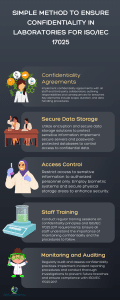
Confidentiality
Another key term closely tied to impartiality is confidentiality.
Labs often handle sensitive client data or proprietary methods. ISO 17025 requires you to protect that information at every stage—from sample handling to reporting.
One assessor told me, “A lab’s credibility is only as strong as its discretion.” That stuck with me.
Make sure every staff member knows what confidentiality means in practice, not just in policy.
Measurement & Metrological Terms Simplified
If you’ve ever felt overwhelmed by the technical side of ISO/IEC 17025, you’re not alone. Terms like measurement uncertainty, traceability, and reference standards sound intimidating—but once you break them down, they’re actually pretty logical.
In my experience, once lab staff truly grasp these concepts, everything about calibration, testing, and reporting starts to click. So let’s translate the jargon into plain English.
Measurement Uncertainty (MU)
Every measurement has a degree of doubt—no instrument or method is perfect.
Measurement uncertainty (MU) quantifies that doubt. It’s the range around your result where the “true” value is expected to lie.
For example, if you measure a sample as 10.00 ± 0.02 mg, that “± 0.02 mg” is your uncertainty. It’s not an error—it’s transparency. You’re showing how confident you are in your result.
Assessors love seeing that you understand uncertainty. They’re not expecting you to be mathematicians—they just want you to know where your confidence limits are and how they affect decisions.
A practical tip: start with your significant sources of uncertainty (like instrument accuracy, environmental conditions, or human reading error). You can refine it later, but the key is to document your reasoning.
Traceability
Traceability is the backbone of reliable measurement. It means your results can be linked to national or international standards through an unbroken chain of calibrations.
Here’s a simple way to picture it: imagine a ladder.
-
The top rung is a national standard (like NIST or NMISA).
-
The middle rungs are calibration labs with known accuracy.
-
The bottom rung is your lab’s instrument.
Each step is verified by the one above it. That’s traceability in action.
A common mistake I’ve seen is assuming that using a “calibrated” instrument automatically guarantees traceability. It doesn’t—only if the calibration certificate clearly states traceability to recognized standards.
Reference Standards and Reference Materials
A reference standard is a highly accurate tool used to calibrate other instruments.
A reference material, on the other hand, is a substance with known properties (like a standard chemical solution) used to check or validate testing methods.
In short: standards check equipment, materials check methods.
One client lab I worked with used commercial test kits but didn’t keep records of the reference materials they relied on. During the audit, that gap was flagged under traceability. A simple fix—adding a reference material log—closed the nonconformity immediately.
Calibration Hierarchy
Calibration hierarchy is simply the documented chain that connects your measurements to a recognized standard.
It’s what gives meaning to traceability.
When an assessor asks for your calibration records, they’re really asking: Can I see the story behind your numbers?
Emerging Terms & Digital Transformation in Laboratories
The world of laboratory testing is changing fast. Ten years ago, everything was on paper—now, assessors walk in expecting digital traceability, online records, and secure data systems. ISO/IEC 17025 has evolved to reflect that.
When I first started consulting, “electronic data integrity” wasn’t even a common phrase. Today, it’s one of the first things auditors ask about. So let’s look at a few emerging terms that every modern lab should understand.
Electronic Records and Data Integrity
Electronic records are your digital equivalents of test reports, calibration logs, and traceability certificates.
Data integrity means that information is complete, consistent, and accurate throughout its lifecycle—no missing entries, no hidden edits.
In practical terms, if your lab uses spreadsheets, LIMS (Laboratory Information Management Systems), or cloud databases, you need to be able to show:
-
Who entered the data
-
When it was entered
-
That it hasn’t been tampered with
One lab I supported moved from handwritten logbooks to a shared spreadsheet but didn’t control editing permissions. During an audit, an assessor noticed timestamps didn’t match user initials. It wasn’t malicious—just poor access control—but it counted as a data integrity issue.
A simple solution? Assign user logins, limit editing rights, and back up records automatically.
LIMS (Laboratory Information Management System)
A LIMS system manages everything from sample tracking to report generation. It’s not mandatory under ISO 17025, but it’s quickly becoming the norm.
Think of it as your lab’s digital nervous system—it keeps data consistent and reduces human error.
When choosing one, make sure it supports traceability and version control. The best systems integrate directly with instruments and generate audit-ready logs automatically.
Electronic Signatures and Digital Certificates
As more labs go paperless, electronic signatures are replacing handwritten ones. ISO 17025 allows them, but they must be secure and verifiable—meaning each signature can be traced back to an authorized person.
Similarly, Digital Calibration Certificates (DCCs) are on the rise. They carry machine-readable metadata that links calibration data directly to reference standards. In plain English: fewer paper files, more reliability.
Assessors appreciate this transparency—especially when certificates are digitally verifiable.
Remote Assessments
Post-2020, many accreditation bodies started conducting remote or hybrid assessments. The terminology around this—“virtual audit,” “digital evidence,” “screen share verification”—is now part of the ISO vocabulary.
What matters most here is readiness. Labs that can instantly share electronic records, calibration certificates, and method files tend to perform far better in remote audits.
The takeaway?
Digital transformation isn’t just about going paperless—it’s about building a system that’s traceable, secure, and easy to demonstrate during assessments.
Now that we’ve covered both traditional and modern ISO 17025 language, let’s address a few common questions labs often ask.
FAQs — Common Questions About ISO/IEC 17025 Terms
Every time I work with a new lab team, the same few questions about ISO/IEC 17025 terminology come up. Let’s go over the ones that cause the most confusion — and clear them up once and for all.
Q1: Do we need to memorize every term in ISO 17025 to get accredited?
Not at all. Accreditation bodies aren’t testing your memory — they’re assessing your understanding.
What matters is that your team can use the terms correctly and apply them in daily practice.
For example, if an assessor asks about “traceability,” they’re not looking for a textbook definition — they want to see if you know how your measurements connect to a standard.
The goal isn’t perfection; it’s comprehension.
Q2: What’s the real difference between “verification” and “validation”?
This one comes up constantly.
-
Validation means proving a method works for its intended purpose.
-
Verification means checking that your method or instrument meets specific performance requirements.
Think of it like this: validation builds trust in the method; verification confirms it’s still performing as expected.
Q3: How often should we review our documentation and glossary?
At least once a year — or whenever something changes.
That includes updates to the standard, new methods, or new equipment.
In practice, many of my clients review documents during their management review meeting. It’s a natural checkpoint to make sure everyone’s on the same page and no outdated terms or procedures are floating around.
Keeping your glossary and documentation current shows assessors your lab is proactive, not reactive.
Reaffirming Authority & Next Steps
If you’ve made it this far, you already understand more about ISO/IEC 17025 than most people working toward accreditation. You’ve learned the language — and that’s half the battle.
In my experience, once a lab team starts speaking ISO 17025 in plain English, everything changes. Communication improves, training becomes easier, and audits stop feeling like exams. Instead, they become what they’re meant to be — a confirmation that your lab knows what it’s doing and can prove it.
Here’s what I want you to remember:
-
ISO 17025 isn’t just about compliance; it’s about confidence in your results.
-
The terms and definitions aren’t there to confuse you — they exist to make your quality system stronger.
-
Clarity is credibility. When everyone in your lab understands the same language, mistakes drop and efficiency rises.
At QSE Academy, we’ve helped hundreds of laboratories around the world simplify their journey to ISO/IEC 17025 accreditation — from writing complete documentation packages to providing customized consulting and training.
If your lab is preparing for accreditation, or struggling to interpret the requirements, don’t do it alone.
Explore our ISO/IEC 17025 Complete Documentation Package or book a consultation with one of our experts. We’ll help you build a system that’s clear, compliant, and audit-ready.
Because in the end, the goal isn’t just passing an assessment — it’s building a lab that people trust.

I hold a Master’s degree in Quality Management, and I’ve built my career specializing in the ISO/IEC 17000 series standards, including ISO/IEC 17025, ISO 15189, ISO/IEC 17020, and ISO/IEC 17065.
My background includes hands-on experience in accreditation preparation, documentation development, and internal auditing for laboratories and certification bodies.
I’ve worked closely with teams in testing, calibration, inspection, and medical laboratories, helping them achieve and maintain compliance with international accreditation requirements.
I’ve also received professional training in internal audits for ISO/IEC 17025 and ISO 15189, with practical involvement in managing nonconformities, improving quality systems, and aligning operations with standard requirements.
At QSE Academy, I contribute technical content that turns complex accreditation standards into practical, step-by-step guidance for labs and assessors around the world.
I’m passionate about supporting quality-driven organizations and making the path to accreditation clear, structured, and achievable.