
Last Updated on May 15, 2026 by Hafsa J.
Follow QSE Academy on Google
Add us as a preferred source to see our ISO and compliance articles more often in your Google results and Discover.
ISO 9001 Certification Process: A Step-by-Step Guide
When business owners first come to me about ISO 9001, the most common thing I hear is:
“We know we need it—but where do we even begin?”
I get it. There’s a lot of noise out there. Some sites talk about endless documentation. Others promise a certificate in two weeks. Neither reflects how certification actually works in the real world.
After helping more than 100 companies—across industries from food production to tech—get ISO 9001 certified, here’s what I’ve noticed:
The businesses that succeed aren’t the ones with the fanciest binders. They’re the ones who understand the process and commit to doing it properly.
That’s exactly what this guide gives you.
We’re going to walk through the ISO 9001 certification process step by step—from what the certification really means, to who actually certifies you, to how long it takes, what it costs, and where most teams go wrong. We’ll also tackle specific questions you’ve probably Googled already—like whether ISO 9001 requires a first article inspection, or if it’s really worth it for a business like yours.
If you want a fluff-free, realistic path to certification—based on real implementation experience—you’re in the right place.
What It Really Means to Be ISO 9001 Certified
Before we dive into audits and costs, let’s make sure we’re clear on this:
ISO 9001 certification doesn’t mean your product is perfect—it means your system is reliable.
And that’s a big deal.
When a company is ISO 9001 certified, it tells the world:
“We’ve built a quality management system that works. It’s documented. It’s audited. And we actually follow it.”
Now, here’s what I’ve noticed after years of working with both certified and non-certified businesses:
The certified ones don’t waste time reinventing processes every six months. They don’t panic when a customer requests a corrective action. They’re more predictable—and that’s what clients and partners pay for.
So, what does ISO 9001 certification actually prove?
-
That you meet the global standard for quality management
-
That your processes are consistent, measured, and improved over time
-
That a third-party auditor reviewed your system and gave it a pass
It’s important to know that ISO 9001 certifies your system—not your people, not your products, and not your business as a whole. That’s a common misconception I see, especially in sales and marketing teams.
Is it worth it?
Honestly? In most cases, yes.
I’ve had clients win six-figure contracts they previously couldn’t qualify for—just because they got certified. And for smaller companies, ISO 9001 can act as an internal discipline tool. It forces you to clean up your processes, align your team, and document what matters.
In this deeper breakdown of the value of ISO certification, I talk more about ROI, but here’s the short version:
If you want to grow, gain trust, or export—ISO 9001 pays off.
Where did ISO 9001 even come from?
Quick history: ISO 9001 is a standard developed by the International Organization for Standardization (ISO), based in Geneva. It’s been around since 1987 and is now in its fifth major version (2015). It’s used in over 170 countries.
And it’s not some obscure system—there are over 1 million ISO 9001 certified companies worldwide, with thousands in the U.S. alone.
Who Actually Certifies You—And Who Doesn’t
Let’s clear up one of the biggest misunderstandings right away:
ISO doesn’t certify anyone.
Yep, you read that right. The International Organization for Standardization (ISO) publishes the standards—but it doesn’t issue certificates, conduct audits, or send anyone to inspect your facility.
So… who does?
Accredited certification bodies.
These are independent third-party organizations accredited by national bodies (like ANAB in the U.S. or UKAS in the U.K.) to audit businesses and issue ISO 9001 certificates.
If you’re serious about getting certified, you’ll need to hire one of these certifiers. They’ll send an auditor to review your documentation, observe your operations, and determine whether your system meets the ISO 9001:2015 standard.
In this guide on who gives ISO 9001 certifications, I break it down in more detail—but the key takeaway is this:
The credibility of your ISO 9001 certificate depends on the credibility of the certifier you choose.
Choose someone well-recognized in your industry and region. Don’t go with the cheapest quote unless you understand what’s included—and who’s behind it.
A Quick Word of Caution: Not All “Certificates” Are Equal
I’ve seen companies flash certificates issued by unknown or non-accredited providers—thinking they’re ISO 9001 certified. They’re not. And when customers or partners dig deeper, it backfires.
If your certifier isn’t recognized by an official accreditation body, your certificate may not be accepted—especially in regulated industries or international markets.
What About Amazon Sellers?
Good question. More and more Amazon sellers are pursuing ISO certification to build buyer trust or qualify for certain B2B opportunities. While Amazon doesn’t require it, ISO 9001 can give private label brands and wholesalers an edge—especially if they’re dealing with distributors or scaling beyond Amazon.
Pro Tip from the Field
Ask certifiers these three things before signing:
Are you accredited, and by whom?
Do you have experience in my industry?
What’s included in your quote (travel, follow-ups, documentation review)?
The ISO 9001 Certification Process: Step-by-Step
By this point, you’re probably thinking:
“Okay, I get what ISO 9001 is. I know who certifies. But what does the actual process look like?”
Here’s the straight answer: it’s not magic—and it’s not one-size-fits-all—but there is a proven structure that works across industries. I’ve followed it with startups, factories, SaaS companies, and even Amazon sellers.
Let’s break it down.
Step 1: Decide to Get Certified
Sounds obvious, but many businesses “think about” ISO for years. The decision becomes real when leadership commits resources—budget, time, and people. That’s when the project starts moving.
If you’re still deciding, my article on how to get ISO 9001 certification can help clarify what it actually takes.
Step 2: Run a Gap Analysis
Before building anything, you need to understand what’s missing.
This is where you compare your current operations to the ISO 9001 requirements and identify gaps—whether in documentation, process control, risk management, or internal audits.
Most companies already meet 50–70% of the requirements—they just don’t have the evidence to prove it yet.
Step 3: Build or Refine Your QMS
Here’s where you create or update your Quality Management System to close the gaps. This includes procedures, roles, KPIs, document control, and customer feedback handling.
Keep it lean. Keep it real. Don’t fall into the trap of over-documentation—just build what you’ll actually use.
Step 4: Train Your Team and Start Running the System
ISO 9001 isn’t just about paperwork. Your team needs to understand what the QMS is and how to follow it in daily work.
In this article on ISO certification for Amazon sellers, I explain how even small teams can train effectively without dragging productivity down.
Step 5: Internal Audit + Management Review
These are mandatory. You need to conduct a full internal audit and a management review before you call in the external certifier.
Think of this as your dress rehearsal. Find issues now, not during the real audit.
Pro tip: The internal audit doesn’t need to be perfect—it just needs to be honest.
Step 6: Stage 1 Audit (Documentation Review)
The certification body will first review your documented system to confirm that it meets the standard on paper.
They’ll check for missing elements, gaps, or inconsistencies. You’ll get a report—and a chance to fix anything before moving to the next stage.
Step 7: Stage 2 Audit (Live Audit of Your Processes)
This is the main event. The auditor comes on-site (or remote, in some cases) and evaluates whether you’re actually doing what your QMS says.
They’ll interview staff, check records, and observe processes. If they find nonconformities, you’ll be asked to correct them before the certificate is issued.
Some clients ask whether ISO 9001 requires first article inspection—it doesn’t, but it does expect you to show how you validate processes and control outputs. It’s about consistency, not just one-time checks.
Step 8: Certification and Surveillance
If all goes well, you get certified! The certificate is valid for three years—but with annual surveillance audits to ensure the system is maintained.
And yes—we’ve also broken down how long ISO 9001 certification takes if you’re wondering about real-world timelines.
ISO 9001 Certification Costs (The Real Numbers)
Let’s talk about what everyone wants to know—but few providers explain clearly:
How much does ISO 9001 certification actually cost?
The truth?
It depends—on your company size, scope, how prepared you are, and who you choose to certify you. But after helping clients across sectors, I can give you real-world ranges and what drives them.
What You’re Actually Paying For
ISO 9001 certification isn’t a single invoice—it’s a combination of different cost buckets:
-
Preparation & Consulting (optional but common)
If you don’t have an internal ISO expert, you may hire a consultant to run your gap analysis, build your QMS, and train your team.
Typical range: $1,500–$10,000+ -
Implementation Tools & Training
Online courses, internal audit checklists, document templates, or QMS software—these vary widely depending on whether you’re DIY-ing or buying premium tools.
Range: $300–$5,000 -
Certification Body Fees
This is the big one. It covers the Stage 1 and Stage 2 audit, and includes the auditor’s time, travel, and admin work.
Range: $4,000–$15,000 over the full 3-year cycle -
Surveillance Audits
These are annual check-ins to keep your certificate valid.
$1,200–$3,000/year depending on complexity
What Drives the Price Up (or Down)?
-
Number of employees or sites — more people, more complexity
-
Scope of certification — are you certifying just production? Or all departments?
-
Industry risk — high-risk industries (like food or aerospace) often involve stricter scrutiny
-
Certifier reputation — big names charge more, but are often better recognized by clients
We’ve written a full breakdown in this comprehensive ISO 9001 cost guide if you want to dig into case-by-case scenarios or compare pricing models.
Pro Tip from the Field
When reviewing quotes, always ask:
Is this price for the initial audit only, or the full 3-year cycle?
Are travel and admin fees included, or added later?
Will I be charged again for follow-ups if there are nonconformities?
Cut-rate certifiers often leave out key costs—then add them back in after you’ve signed. That “cheap” quote quickly becomes expensive.
Now You Know the Process—Time to Take Action
ISO 9001 certification isn’t just a stamp of approval—it’s a system that helps your business grow, stabilize, and build real trust with your clients.
By now, you’ve got the full picture:
-
What ISO 9001 certification actually means (and what it doesn’t),
-
Who certifies you (and who to avoid),
-
What each step in the process looks like—from decision to audit,
-
And what it really costs, depending on your setup.
The businesses that get certified quickly and cleanly aren’t the ones with the most resources—they’re the ones with clarity and commitment.
What’s Next?
If you’re serious about certification, here are your logical next moves:
-
Bookmark this guide—you’ll come back to it often
-
Check out our complete cost breakdown in this article if you’re budgeting your project
-
Book a call if you want help navigating certification, audits, or just don’t want to waste time on trial and error
In my experience, the hardest part isn’t getting certified—it’s starting.
Now that you’ve got the roadmap, you’re not guessing anymore. You’re leading with intention.
Ready to move from ISO 9001 theory to implementation?
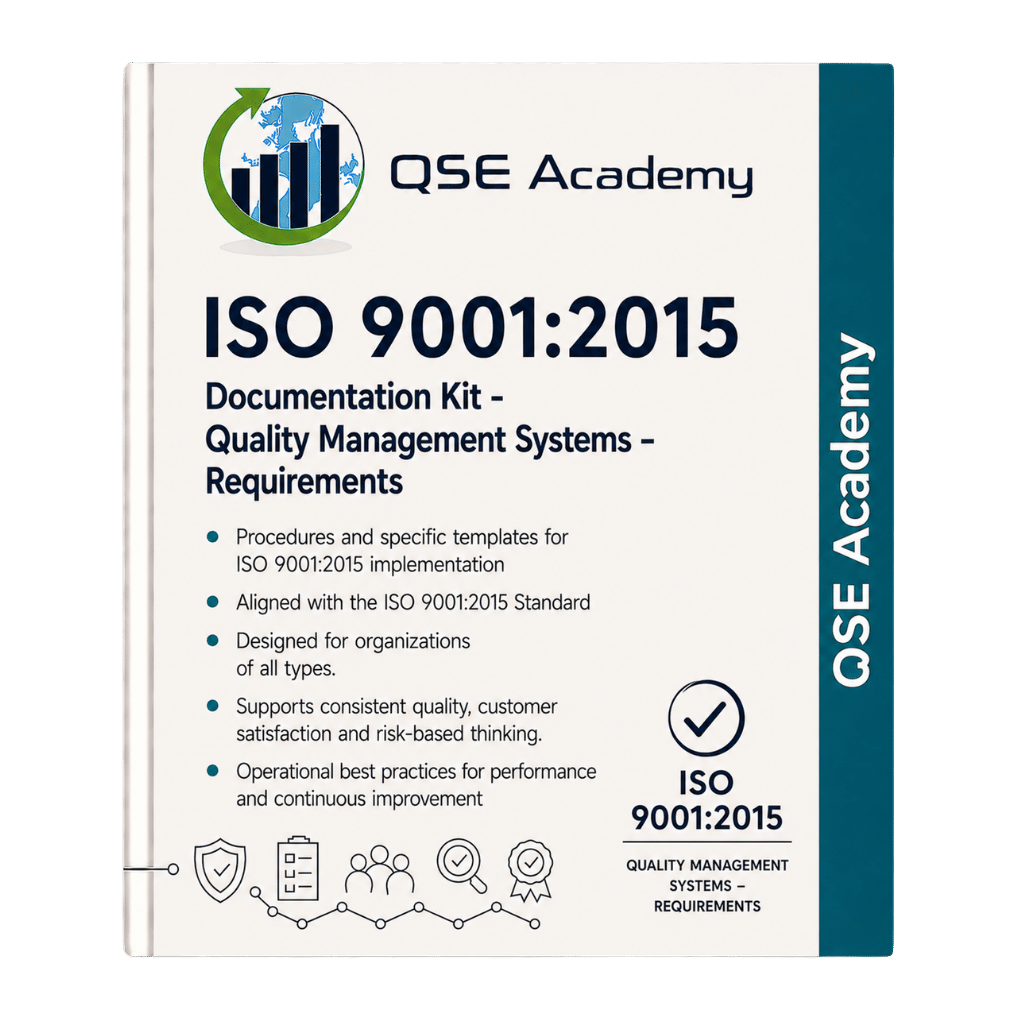
Get the exact tools you need to write your documentation, train your team, map your processes, and pass your audit—without wasted time or guesswork.
👋 Hi, I’m HAFSA, and for the past 12 years, I’ve been on a journey to Whether it’s ISO 9001, ISO 22000, or the cosmetics-focused ISO 22716, I’ve spent my career I’m not here to call myself an expert—I prefer “enthusiast” because I truly love what I do. When I’m not writing about standards, you’ll probably find me playing Piano 🎹, connecting with people, or diving into my next big project💫. I’m an engineer specialized in the food and agricultural industry
make ISO standards less intimidating and more approachable for everyone.
turning complex jargon into clear, actionable steps that businesses can actually use.
There’s something incredibly rewarding about helping people navigate food safety and quality management systems
in a way that feels simple, practical, and even enjoyable.
I have a Master’s in QHSE management and over 12 years of experience as a Quality Manager
I’ve helped more than 15 companies implement ISO 9001, ISO 22000, ISO 22716, GMP, and other standards
My clients include food producers, cosmetics manufacturers, laboratories, and service companies
I believe quality systems should be simple, useful, and efficient.