Add us as a preferred source to see our ISO and compliance articles more often in your Google results and Discover.
ISO/IEC 17025 Main Changes in the 2017 Structure
If you’ve been working with laboratory accreditation for a while, you probably noticed a big shift when ISO/IEC 17025 was updated in 2017. Whether you’re new to the standard or transitioning from the 2005 version, understanding the ISO/IEC 17025 main changes is essential for staying current—and compliant.
This update wasn’t just a light refresh. The 2017 version introduced a whole new structure, adopted risk-based thinking, and aligned more closely with other modern ISO standards. In this article, we’re going to walk through the ISO/IEC 17025 main changes step by step, breaking down what’s new, what’s gone, and how it all fits together in today’s lab environment.
Let’s get into the details.
From Clause-Based to Process-Based Structure
One of the biggest ISO/IEC 17025 main changes introduced in the 2017 revision is the shift from a clause-based format to a more process-oriented structure. If you worked with the 2005 version, you probably remember the rigid structure that grouped everything under strict technical and management requirements. While that setup worked for many years, it didn’t always reflect how labs actually operate in the real world.
The 2017 update brings a more natural flow to how labs manage quality, technical competence, and decision-making. Instead of organizing the standard purely by topic, the new version aligns with how processes move in practice—from planning and resource management to evaluation, reporting, and improvement.
This structural update isn’t just cosmetic. It helps labs:
Build systems that reflect their actual workflow
Integrate ISO/IEC 17025 with other management system standards (like ISO 9001)
Focus on outcomes instead of just ticking compliance boxes
So, when we talk about the ISO/IEC 17025 main changes, this process-based shift is a key one. It encourages labs to think in terms of systems and relationships, rather than isolated tasks. That makes the standard more intuitive and more adaptable—especially for labs already using other ISO standards in their operations.
Next, we’ll look at how the section headings themselves have changed—and why that matters when setting up or updating your quality management system.
ISO/IEC 17025 Main Changes in Section Headings
Another one of the most noticeable ISO/IEC 17025 main changes is how the entire standard is now organized. If you’re used to the older version, you probably remember it being split into two main parts: Management Requirements and Technical Requirements. While that structure got the job done, it didn’t always reflect how those elements connected in day-to-day lab operations.
In the 2017 version, the structure is completely reshaped. Instead of just two sections, there are now eight main clauses that follow a more logical, process-friendly flow:
Scope
Normative References
Terms and Definitions
General Requirements
Structural Requirements
Resource Requirements
Process Requirements
Management System Requirements
This updated format is one of the key ISO/IEC 17025 main changes because it helps laboratories organize their systems around how work actually happens—not just around compliance checklists. For example, instead of separating management and technical topics, areas like impartiality, resource control, and documentation are integrated into the structure where they naturally belong.
Another reason this change matters: the new format aligns more closely with other ISO standards, like ISO 9001 and ISO/IEC 17020. That makes it easier for labs that need to comply with multiple standards, and it encourages system-wide consistency across different types of operations.
So, if you’re updating your documentation or creating new procedures, understanding these ISO/IEC 17025 main changes to section headings will help you structure everything more efficiently—and in a way that flows with your actual work, not against it.
Next, we’ll explore how the concept of risk has been built directly into the structure, replacing the old idea of preventive actions. Let’s take a closer look.
Risk-Based Thinking Integrated into the Structure
One of the most important ISO/IEC 17025 main changes in the 2017 version is how the concept of risk is now woven throughout the entire standard. In the older version, labs were expected to use something called “preventive action” to avoid mistakes before they happened. While that idea made sense, it felt like an add-on rather than something truly integrated into the system.
In the 2017 version, that’s completely changed. Now, risk-based thinking is part of the process from the ground up. This means labs are encouraged to identify potential risks as they go—whether that’s related to impartiality, equipment failure, staffing, or data handling—and take appropriate action based on the context.
Here’s how this ISO/IEC 17025 main change shows up in practice:
You’re no longer required to have a separate “preventive action” procedure
Instead, risk management is expected to be part of how you plan and execute activities
Labs have more freedom to determine how to assess and address risk, based on their size and scope
It supports proactive thinking without being overly prescriptive
For example, if you rely on a single technician to perform a critical calibration, the risk-based approach would have you think: What happens if they’re unavailable? Do we have a backup? That’s the kind of real-world planning this change encourages.
This shift is one of the more practical ISO/IEC 17025 main changes because it makes the standard more flexible and realistic. Labs can use tools like risk registers, SWOT analyses, or simple brainstorming sessions to identify areas of concern—whatever suits their style and resources.
The goal isn’t to eliminate all risks (because that’s impossible), but to be aware of them and manage them in a way that keeps your lab running smoothly and reliably.
In the next section, we’ll dive into how the language and flow of the standard have evolved to support this more outcome-driven, process-friendly mindset. Let’s keep going.
ISO/IEC 17025 Main Changes in Terminology and Flow
Another key area you’ll notice when working with the 2017 version is the updated terminology and improved flow of the standard. This might not sound like a major deal at first, but it’s one of those ISO/IEC 17025 main changes that really affects how easy the standard is to understand—and apply.
The 2005 version was often seen as more rigid and, at times, a bit too focused on formal compliance language. The 2017 revision shifts toward outcome-based language. In other words, the focus isn’t just on what labs are supposed to do, but on why they’re doing it and what result they should aim for.
Here’s what this looks like in practice:
The standard now speaks more in terms of processes and results, rather than checklists
Requirements are written to support flexibility and judgment, not just fixed methods
You’ll find terms that are more aligned with other ISO management system standards (like ISO 9001), making it easier to integrate systems if needed
There’s a smoother logical flow from planning, through technical activity, to reporting and continual improvement
This improvement in structure and terminology is one of the ISO/IEC 17025 main changes that helps laboratories feel less boxed in. You’re no longer required to mimic someone else’s exact system—you’re encouraged to develop a system that reflects how your lab works best, while still meeting all the standard’s requirements.
Even simple word changes help make the standard clearer. For example, using “shall ensure” instead of “shall document” places the emphasis on real-world results instead of just paperwork.
So if you’ve felt frustrated with the old format in the past, these updates might feel like a breath of fresh air. They’re designed to make ISO/IEC 17025 more practical, more relatable, and more adaptable—no matter what kind of lab you’re running.
Up next, we’ll talk about how documentation requirements have evolved and how labs now have much more flexibility when it comes to managing their quality records. Let’s dive into that.
Flexible Approach to Documentation and Records
One of the ISO/IEC 17025 main changes that’s been a relief for many labs is the flexibility around documentation. In the older version, there was a strong emphasis on creating and maintaining a formal quality manual. While helpful in some cases, it also added a lot of paperwork that didn’t always reflect how a lab actually works.
The 2017 version takes a different, more practical approach. It no longer requires a traditional quality manual at all. Instead, it focuses on results—not formats. This is one of the more freeing ISO/IEC 17025 main changes because it allows each lab to decide what kind of documentation works best for their structure, size, and workflow.
Here’s what this flexibility looks like:
You can present your documentation in any structure—as long as it covers all requirements
You’re encouraged to align documentation with real processes instead of fitting them into a template
Records and procedures can be digital, cloud-based, or traditional—whatever supports traceability and accessibility
Of course, documentation still matters. The key is that it should serve a clear purpose: support quality, ensure consistency, and allow for effective auditing. ISO/IEC 17025 is no longer about filling folders—it’s about building functional systems.
So, if you’re updating your system or starting fresh, this is a great time to rethink what documentation your team actually needs. Do your procedures help people do their jobs? Are your records easy to find, use, and maintain? If yes, you’re already meeting one of the most practical ISO/IEC 17025 main changes.
Next, we’ll explore how the updated standard now recognizes digital systems and data integrity—another important step forward for modern labs. Let’s keep going.
Technology and Data Integrity Now Explicit
In today’s digital world, it’s no surprise that one of the ISO/IEC 17025 main changes includes recognizing technology and data integrity as essential parts of laboratory operations. The 2017 version finally makes it clear: electronic systems are here to stay—and they need to be managed just as seriously as any piece of lab equipment.
In previous versions of the standard, references to digital tools were vague at best. But with labs increasingly relying on Laboratory Information Management Systems (LIMS), cloud storage, and digital instruments, the standard had to evolve. One of the standout ISO/IEC 17025 main changes is how it explicitly includes these modern systems within the quality framework.
Here’s what that looks like in practice:
The standard recognizes that records can be digital, not just paper-based
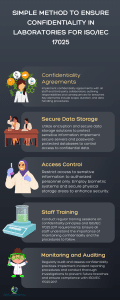
There’s an emphasis on ensuring data integrity—meaning records must be complete, secure, and tamper-proof
Labs are expected to manage access controls, backups, and software validation to protect the reliability of electronic data
Use of remote access or digital interfaces is permitted—as long as the lab can still ensure confidentiality, impartiality, and traceability
This is a huge shift for labs that have fully or partially digitized their operations. It means you can confidently use modern tools while staying aligned with the standard—provided those tools are managed properly.
And that’s the core of this ISO/IEC 17025 main change: it’s not just about having fancy software. It’s about managing technology responsibly so the integrity of your data is never in question.
If your lab uses electronic systems for results, calibration tracking, or document management, now is the time to review how those systems align with ISO/IEC 17025. Do you have access controls? Are your backups routine and secure? Can you prove that the data hasn’t been altered?
In the final section, we’ll wrap up with a quick recap of the most critical ISO/IEC 17025 main changes and why staying up to date matters so much for labs today. Let’s bring it all together.
Final Overview of ISO/IEC 17025 Main Changes
Let’s take a moment to tie everything together. We’ve covered a lot of ground, and by now, the ISO/IEC 17025 main changes probably feel much clearer—and more approachable.
The 2017 version wasn’t just a minor update. It brought a fresh perspective to how laboratories are expected to operate and manage quality. Instead of focusing on rigid documents and strict formats, the revised standard encourages flexibility, real-world thinking, and smart use of technology—all while maintaining a strong focus on impartiality, competence, and reliable results.
To recap, here are the most impactful ISO/IEC 17025 main changes:
A shift from a clause-based format to a process-based structure that mirrors how labs actually function
Updated section headings that support better integration with other ISO standards like ISO 9001
Introduction of risk-based thinking throughout the system—replacing preventive actions with proactive awareness
Clearer, more practical terminology and flow that emphasizes results, not just rules
A flexible approach to documentation—goodbye, mandatory quality manual
Official recognition of digital systems and data integrity as part of your lab’s quality framework
Together, these ISO/IEC 17025 main changes represent a major step forward. They make the standard more relevant, more adaptable, and more aligned with how modern labs work today. Whether you’re preparing for accreditation or just reviewing your system for improvement, understanding these updates is key to staying on track and ahead of the curve.
If you’ve made it this far, congratulations—you now have a strong handle on the ISO/IEC 17025 main changes and how they affect your lab’s structure, mindset, and operations. Keep this momentum going, and your quality system will be better for it.
I hold a Master’s degree in Quality Management, and I’ve built my career specializing in the ISO/IEC 17000 series standards, including ISO/IEC 17025, ISO 15189, ISO/IEC 17020, and ISO/IEC 17065.
My background includes hands-on experience in accreditation preparation, documentation development, and internal auditing for laboratories and certification bodies.
I’ve worked closely with teams in testing, calibration, inspection, and medical laboratories, helping them achieve and maintain compliance with international accreditation requirements.
I’ve also received professional training in internal audits for ISO/IEC 17025 and ISO 15189, with practical involvement in managing nonconformities, improving quality systems, and aligning operations with standard requirements.
At QSE Academy, I contribute technical content that turns complex accreditation standards into practical, step-by-step guidance for labs and assessors around the world.
I’m passionate about supporting quality-driven organizations and making the path to accreditation clear, structured, and achievable.
Take the next step
Prepare your ISO/IEC 17025 certification with the complete kit
The complete documentation package to deploy an ISO/IEC 17025:2017-compliant laboratory management system: ready-to-use document architecture covering competence, methods, metrological traceability, uncertainty, and statements of conformity.