
Last Updated on May 15, 2026 by Hafsa J.
Follow QSE Academy on Google
Add us as a preferred source to see our ISO and compliance articles more often in your Google results and Discover.
New Changes to ISO/IEC 17025:2017 Testing and Calibration Laboratories
If you work in a testing or calibration lab, you’ve probably heard some buzz about the new changes to ISO/IEC 17025 2017. And if you’re still working with an older version—or just trying to figure out what’s different—you’re not alone. The 2017 revision brought a significant update to the standard, modernizing how laboratories demonstrate competence and manage quality.
So, what exactly changed? And why should you care?
The new changes to ISO/IEC 17025 2017 touch nearly every part of how labs are structured and operated. From a stronger focus on risk and impartiality to clearer language and a completely reorganized layout, this update isn’t just cosmetic—it changes the way labs think and work.
In this article, we’ll walk through the new changes to ISO/IEC 17025 2017 in a clear, simple way so you can understand:
-
How the standard aligns with other ISO systems
-
What risk-based thinking means for your lab
-
Where sampling, software, and non-standard methods now fit
-
What’s new with confidentiality and impartiality requirements
-
How the entire structure of the standard has been reorganized
Whether you’re getting accredited for the first time or updating your system, understanding the new changes to ISO/IEC 17025 2017 is a must. And don’t worry—we’ll keep it simple, practical, and jargon-free. Let’s break it down together.
Alignment with ISO’s High-Level Structure (HLS)
One of the most noticeable new changes to ISO/IEC 17025 2017 is its alignment with the ISO High-Level Structure, or HLS for short. Now, if that term sounds a bit technical, don’t worry—I’ll break it down.
The HLS is basically a common framework that ISO uses across many of its standards, like ISO 9001 (quality management) or ISO 14001 (environmental management). It’s a way to make sure all these systems speak the same language. Before the 2017 revision, ISO/IEC 17025 had its own layout that didn’t quite line up with other standards. That made it harder for labs to integrate multiple management systems under one roof.
With the new changes to ISO/IEC 17025 2017, the standard now follows the HLS format, which means it:
-
Uses the same structure, clause numbering, and terminology as other ISO standards
-
Makes it easier to integrate ISO/IEC 17025 with ISO 9001 or ISO 15189
-
Provides a more logical, process-based flow that’s easier to follow
This structural change might not seem exciting at first, but it’s actually a big win for labs. It allows quality managers to build a single, unified system instead of juggling separate requirements for each standard.
More importantly, the new changes to ISO/IEC 17025 2017 help create consistency across different types of laboratories and industries. Whether you’re working in pharmaceuticals, food testing, or environmental science, the language and expectations are now aligned with global best practices.
So if you’ve been trying to manage multiple standards and feeling like you’re dealing with a puzzle that doesn’t quite fit together, the HLS update is one of those new changes to ISO/IEC 17025 2017 that brings everything into better alignment—and that’s a welcome shift for everyone involved.
Emphasis on Risk-Based Thinking
One of the most important new changes to ISO/IEC 17025 2017 is the introduction of risk-based thinking. Now, if the word “risk” immediately makes you think of spreadsheets or complex assessments, don’t worry—it’s not as intimidating as it sounds.
In earlier versions of the standard, labs were expected to use something called “preventive action.” It was meant to help you catch problems before they happened. But in reality, it often ended up being just another section in the quality manual that didn’t get much attention. With the new changes to ISO/IEC 17025 2017, that idea has been replaced with something far more practical: risk-based thinking.
So what does that actually mean for your lab?
It means you’re expected to:
-
Identify potential risks that could affect the quality of your results
-
Evaluate how serious those risks are
-
Put in place actions to reduce or eliminate them
-
Review those risks regularly as your lab evolves
And here’s the good news: there’s no required format. ISO isn’t asking you to fill out a specific form or follow a rigid method. Instead, the new changes to ISO/IEC 17025 2017 encourage you to build risk awareness into everyday lab operations.
For example:
-
Is there a risk that a piece of equipment could give inaccurate results if not calibrated on time?
-
Could miscommunication between departments delay a test?
-
Are there potential conflicts of interest that could affect impartiality?
By thinking through these possibilities ahead of time—and acting on them—you’re building a stronger, more resilient system. And that’s exactly what the new changes to ISO/IEC 17025 2017 are aiming for.
So, risk-based thinking isn’t about adding another layer of bureaucracy. It’s about being proactive instead of reactive, and making sure your lab is always one step ahead. It’s flexible, it’s scalable, and it makes a real difference in how you manage quality.
Broader Scope and Flexibility in Lab Activities
Another one of the standout new changes to ISO/IEC 17025 2017 is the way it expands and modernizes the scope of what labs are allowed to do. The previous version of the standard focused heavily on traditional testing and calibration, but the updated version recognizes that labs are evolving—and so are the tools and methods they use.
The 2017 revision opens the door for more flexibility, especially in three key areas: sampling, information technology, and non-standard methods.
Sampling and Lab Information Systems Are Now Covered
Under the new changes to ISO/IEC 17025 2017, the standard now clearly includes sampling as part of the lab’s accredited activities. That’s a big deal because many labs don’t just test what’s handed to them—they’re also the ones going out and collecting samples.
To comply, labs need to:
-
Document their sampling procedures
-
Ensure personnel are trained in proper sampling techniques
-
Keep records that link samples to results with full traceability
In addition to sampling, the new version also formally recognizes the use of information technology. This includes laboratory information management systems (LIMS), software tools, spreadsheets, and automated equipment. The standard now expects labs to validate and control these tools just like any other part of the process.
Greater Flexibility with Test Methods
Perhaps one of the most welcomed new changes to ISO/IEC 17025 2017 is the acceptance of non-standard, modified, or laboratory-developed methods—as long as they’re validated and appropriate for their intended use. This is great news for labs that need to be innovative or work with unique materials that don’t fit into standard protocols.
This flexibility allows labs to:
-
Adapt methods to specific customer needs
-
Use in-house techniques for new or emerging tests
-
Operate in industries where commercial standards don’t exist yet
Of course, with flexibility comes responsibility. The standard still requires full validation, documentation, and proof that the method is fit for purpose.
So, the new changes to ISO/IEC 17025 2017 don’t just make the standard more modern—they make it more realistic. They acknowledge that labs do more than just follow manuals; they adapt, they innovate, and they rely on technology. This update gives labs the freedom to do just that—while still maintaining a strong, quality-focused foundation.
New Focus on Impartiality and Confidentiality
Let’s talk about trust. At the heart of any testing or calibration lab is the expectation that results are unbiased and private. That’s why one of the most meaningful new changes to ISO/IEC 17025 2017 is the much sharper focus on impartiality and confidentiality.
In the past, these concepts were touched on—but now, they’re front and center with their own dedicated clauses. The standard isn’t just asking labs to be neutral and discreet. It’s asking them to actively prove it.
Impartiality is Now a Core Requirement
One of the standout new changes to ISO/IEC 17025 2017 is how it treats impartiality. Instead of being buried in the details, it’s now clearly spelled out as a key requirement. Labs are expected to take a hard look at anything that could influence their objectivity—and that includes things like personal relationships, financial pressures, or even internal biases.
Here’s what labs now need to do:
-
Identify risks to impartiality during normal operations
-
Evaluate those risks and document how they’re being managed
-
Make sure all staff understand the importance of staying neutral
For example, if a lab technician is testing samples from a client who’s also a close business partner, that’s a potential conflict. Under the new changes to ISO/IEC 17025 2017, labs are expected to catch these situations before they impact results.
Stronger Protection of Confidentiality
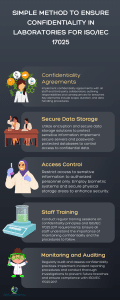
Confidentiality also gets a major upgrade in the 2017 version. With so much sensitive data moving through labs—whether it’s customer formulations, proprietary research, or regulatory test results—the standard now demands clear, documented procedures to protect that information.
Labs must now:
-
Define who has access to confidential data
-
Train staff on handling private information appropriately
-
Put safeguards in place to prevent unauthorized disclosure
The new changes to ISO/IEC 17025 2017 make it clear that trust isn’t just about accuracy—it’s also about discretion. Clients need to feel confident that their data is safe in your hands, and now, the standard gives you a framework to make sure of it.
So, while impartiality and confidentiality might not involve fancy equipment or complex test methods, they’re every bit as important. Thanks to the new changes to ISO/IEC 17025 2017, these critical values are no longer implied—they’re explicitly required, and that helps raise the bar for every accredited lab.
Clarified Terminology and Definitions
Have you ever read a standard and felt like you needed a dictionary just to get through it? You’re not alone. That’s why one of the most helpful new changes to ISO/IEC 17025 2017 is the effort to make the language clearer and more consistent. It might not sound glamorous, but it makes a real difference in how easy the standard is to understand and apply.
Updated Terms That Reflect Real Lab Practices
The new changes to ISO/IEC 17025 2017 include several updated terms and definitions that better reflect the way modern labs actually operate. These aren’t just technical tweaks—they help eliminate confusion and make sure everyone’s on the same page, whether you’re working in quality assurance, technical testing, or management.
A few examples include:
-
“Decision rule” — This term is now clearly defined and must be applied when you’re making statements of conformity (like pass/fail calls based on test results). Labs need to document how they apply decision rules and communicate them to clients.
-
“Verification” vs. “Validation” — These two terms are now better distinguished. Verification checks that a method works as intended, while validation proves that a method is suitable for a specific application.
-
“Laboratory-developed method” — This term officially acknowledges that not all labs use only published methods—some develop their own, and now there’s clear guidance for how to validate those.
These changes aren’t just for clarity—they’re also about consistency across different ISO standards. That way, if your lab also works with ISO 9001 or ISO 15189, you’re not juggling different definitions for the same concepts.
Impacts on Documents and Training
Of course, with updated terminology comes the need to review your internal documents. One of the practical new changes to ISO/IEC 17025 2017 is that your lab may need to revise procedures, SOPs, and training materials to reflect the new terms.
That includes:
-
Updating terminology in your quality manual
-
Making sure staff are trained on what the new terms mean
-
Reviewing customer-facing documents like test reports and contracts for consistency
This might feel like a bit of administrative work, but it’s an important part of aligning your system with the revised standard. Plus, when everyone in your lab is speaking the same language—literally—it’s easier to train new staff, avoid misunderstandings, and ensure smooth operations.
The new changes to ISO/IEC 17025 2017 aren’t just about big structural updates. Sometimes, small words make a big impact. By clarifying the language, the standard helps labs move forward with more confidence, less confusion, and better communication across the board.
Revised Structure and Clause Reorganization
If you’ve worked with the older version of the standard, one of the first new changes to ISO/IEC 17025 2017 you’ll notice is the completely revamped structure. The layout is cleaner, more logical, and way easier to navigate—especially if you’re new to the standard or managing multiple ISO systems at once.
Before 2017, the clauses were grouped in a more traditional format, separating management and technical requirements. But with the new changes to ISO/IEC 17025 2017, everything is now reorganized into five main sections, each focusing on a specific area of your lab’s operations.
The Five Main Sections You Need to Know
The revised structure includes:
-
General Requirements – covers impartiality and confidentiality
-
Structural Requirements – focuses on the lab’s legal status and responsibilities
-
Resource Requirements – includes personnel, equipment, and facilities
-
Process Requirements – covers all technical activities like sampling, method validation, and reporting
-
Management System Requirements – ensures quality management is documented and working
This new format aligns with the ISO High-Level Structure, making it easier to integrate ISO/IEC 17025 with other systems like ISO 9001 or ISO 14001. So, if your lab already has a quality or environmental system in place, these new changes to ISO/IEC 17025 2017 mean less duplication and more consistency across the board.
Option A vs. Option B: Choose Your Management Approach
Here’s another one of the more flexible new changes to ISO/IEC 17025 2017—you now have two ways to set up your management system: Option A or Option B.
-
Option A is the traditional ISO/IEC 17025 format. It’s for labs that aren’t certified to ISO 9001 and want to meet all requirements directly within the 17025 framework.
-
Option B is for labs that already have ISO 9001 certification. In this case, if your ISO 9001 system covers the same ground, you don’t have to duplicate the effort. You just need to show how your existing system meets the ISO/IEC 17025 requirements.
This flexibility is one of the most practical new changes to ISO/IEC 17025 2017. It allows labs to choose the path that fits their structure and goals, without compromising on quality.
In the end, the reorganized structure isn’t just about easier reading—it’s about helping you build a more efficient, aligned, and sustainable system. Whether you’re just starting out or updating your current setup, the new changes to ISO/IEC 17025 2017 give you a clearer roadmap to work from—and that’s something every lab can appreciate.
Final Notes on New Changes to ISO/IEC 17025 2017
We’ve covered a lot, haven’t we? From risk-based thinking and updated terminology to flexible methods and a brand-new structure, it’s clear that the new changes to ISO/IEC 17025 2017 are more than just a revision—they’re a full upgrade to how testing and calibration labs operate in today’s world.
These updates weren’t made just to keep auditors busy. They’re designed to make your lab more modern, more adaptable, and more in tune with the real-world demands you face every day. Whether it’s embracing technology, validating non-standard methods, or simplifying how your systems align with other standards, the new changes to ISO/IEC 17025 2017 are meant to support how labs actually work—not just how they’re supposed to work on paper.
Here’s a quick recap of what makes this revision so important:
-
It aligns with ISO’s High-Level Structure for easier integration
-
It encourages proactive quality through risk-based thinking
-
It expands the standard’s scope to include sampling and digital systems
-
It strengthens core principles like impartiality and confidentiality
-
It updates language and structure to make things clearer and more consistent
And the best part? These changes give your lab more flexibility while still maintaining a high standard of quality and competence. You can build a system that works for you, your team, and your clients—without feeling like you’re boxed into rigid rules.
So whether you’re updating your current system or starting fresh, understanding the new changes to ISO/IEC 17025 2017 is the first step. Once you’re familiar with what’s different—and why—it becomes much easier to take action and move forward with confidence.
Remember, the goal isn’t to be perfect—it’s to be prepared, consistent, and credible. With these changes in place, you’ve got a stronger foundation to do just that.
I hold a Master’s degree in Quality Management, and I’ve built my career specializing in the ISO/IEC 17000 series standards, including ISO/IEC 17025, ISO 15189, ISO/IEC 17020, and ISO/IEC 17065. My background includes hands-on experience in accreditation preparation, documentation development, and internal auditing for laboratories and certification bodies. I’ve worked closely with teams in testing, calibration, inspection, and medical laboratories, helping them achieve and maintain compliance with international accreditation requirements. I’ve also received professional training in internal audits for ISO/IEC 17025 and ISO 15189, with practical involvement in managing nonconformities, improving quality systems, and aligning operations with standard requirements. At QSE Academy, I contribute technical content that turns complex accreditation standards into practical, step-by-step guidance for labs and assessors around the world. I’m passionate about supporting quality-driven organizations and making the path to accreditation clear, structured, and achievable.