
Last Updated on August 21, 2026 by Levy M.
Follow QSE Academy on Google
Add us as a preferred source to see our ISO and compliance articles more often in your Google results and Discover.
Type A vs Type non-A: The ISO/IEC 17020:2026 Independence Change
If you held a Type A, Type B or Type C classification under the 2012 edition, the first question on your mind is the right one: which type am I now? Here is the direct answer. ISO/IEC 17020:2026 replaces the old three-way split with just two categories, Type A and Type non-A. A fully independent third party stays Type A. The former Type B (in-house) and Type C (mixed) bodies both fall under Type non-A. You confirm this activity by activity, because a body can hold different types for different inspection activities.
That sounds like a simple relabelling, and for some bodies it is. For others it is the single most consequential change in the edition, because the new structure carries an operational sting that the old one did not: the impartiality requirements now apply equally to both types. This guide gives you the mapping from old to new, the exact requirements for each type from the normative Annex A, the one point that catches former in-house bodies hardest, and the documents you have to rewrite once you know your category.
Why two types instead of three
The 2026 introduction explains the logic: the categorization of inspection bodies as Type A and Type non-A reflects the level of their independence. That is the whole basis for the change. Independence is now treated as a line, fully independent third party on one side and everything else on the other, rather than the three boxes the 2012 edition used.
Under the 2012 edition, Type A meant a third party independent of the parties involved, Type B was an in-house body inspecting its own parent organization’s items, and Type C was a body that both produced or supplied and inspected, with internal safeguards. The 2026 edition keeps Type A on essentially the same footing and folds the former Type B and Type C into a single Type non-A. The reason is that the edition manages impartiality through monitoring and safeguards applied to everyone, rather than through the org-chart category a body happens to sit in, so the B and C distinction stopped doing useful work.
What Type A requires (Annex A.1)
Annex A is normative, so these are requirements, not guidance. A Type A inspection body shall be independent of the parties involved, which the standard explains can include the client, the owner or user of the item, and any organization involved in the design, manufacture, supply, installation or maintenance of the items, as well as potential purchasers.
In practical terms, a Type A body and its personnel shall not engage in the design, manufacture, supply, installation, purchase, ownership, use or maintenance of the item inspected, and the 2026 edition extends that restriction to similar competitive items, meaning alternatives competing in the market with the item inspected. The body shall not be part of a legal entity that engages in those activities for the item or similar competitive items, and it shall not be linked to a separate legal entity that does, whether through common ownership, shared board appointees, reporting to the same higher level of management, or any other means that could establish the ability to influence the outcome of an inspection.
The extension to similar competitive items is the part to watch, because it is new in 2026. A body that inspects one manufacturer’s product while its parent group sells a competing version now has an independence problem it may not have flagged before. If you claim Type A, walk your whole legal entity and its links against this list, not just the inspection unit.
What Type non-A requires (Annex A.2)
A Type non-A inspection body is defined simply as one that does not meet the Type A requirements of Annex A.1. That is the whole test. If you cannot satisfy every Type A condition for a given activity, you are Type non-A for that activity.
Annex A.2 sets two requirements. First, the legal entity shall provide safeguards within the organization to ensure adequate segregation of responsibilities and accountabilities between inspection and other activities. Second, the design, manufacture, supply, installation, servicing, maintenance and the inspection of the same item shall not be undertaken by the same person. There is one exception: where a scheme requirement explicitly allows the same person to do both, and only as long as it does not compromise the inspection results.
Notice what Type non-A does not give you. It is not a lighter tier of impartiality. The segregation safeguards and the same-person rule are firm requirements, and as the next section shows, the general impartiality requirements apply to you in full. Type non-A is a recognition that you operate inside a larger organization, not a relaxation of the duty to be impartial.
Which am I now? The old-to-new mapping
For most bodies the mapping is straightforward. The table below is the starting point; the one case that needs care is a former Type C body that performed genuinely third-party inspections, because some of those activities may now need to meet the full Type A requirements rather than defaulting to non-A.
| Your 2012 type | What it meant | Your 2026 category |
|---|---|---|
| Type A | Third party independent of the parties involved | Type A, provided it still meets every Annex A.1 condition, including the new similar-competitive-items test |
| Type B | In-house body inspecting its parent organization’s items | Type non-A |
| Type C | Body that both produced or supplied and inspected, with internal safeguards | Type non-A, but check each activity: any genuine third-party inspection may need to meet Type A |
Because the classification is made activity by activity, the cleanest way to settle it is to run each of your inspection activities through the test. Use the self-classifier below: answer the questions about who owns, makes or uses the items you inspect, and it points each activity toward Type A or Type non-A so you know which requirements apply.
The point that catches former in-house bodies
Here is the operational consequence almost no one spells out. The 2026 introduction states that the impartiality requirements are equally applicable to both Type A and Type non-A inspection bodies. Your category describes your independence; it does not dial down your impartiality duty. For a former Type B body, one that inspects its own parent organization’s items, that is a real shift, because the old structural category did a lot of the explaining and the full impartiality discipline now applies regardless of where you sit.
In concrete terms, as a Type non-A body you still have to meet every part of Clause 4.1. You shall monitor your activities and relationships to identify threats to impartiality on an ongoing basis, and that monitoring shall include the relationships of your personnel (4.1.3). Where a threat is identified you shall eliminate or minimize it and demonstrate how (4.1.4). You shall have top management commitment to impartiality (4.1.5), be structured and managed to safeguard it (4.1.6), and ensure that personnel involved in inspection are not remunerated in a way that influences results (4.1.7).
For an in-house body, the relationships that 4.1.3 wants monitored are precisely the ones woven into your own organization: the production line you inspect, the manager whose targets your findings affect, the colleague who designed the thing in front of you. None of that disqualifies you as Type non-A, but all of it now has to be identified, monitored and managed as an impartiality threat, with evidence. That is the work former in-house bodies most often underestimate. Let me be direct about where the comfort is and is not: what does not change is that being Type non-A is entirely legitimate, but the impartiality duty that sits on top of it is the same one a Type A body carries.
Once you know your type: the documents to rewrite
Settling your classification is only useful if the documents follow it. Once you have your type for each activity, this is the short list that usually needs to change.
- An independence classification statement that records, activity by activity, whether you are Type A or Type non-A and the rationale against the Annex A conditions. This is the document an assessor reads first to understand what to check.
- An impartiality threat register, kept as a living record under the ongoing monitoring of 4.1.3, listing the relationships you have identified, the threat each poses and how you eliminate or minimize it.
- For Type A, evidence that your legal entity and its links are clear of the item inspected and of similar competitive items, covering the new 2026 test.
- For Type non-A, the documented safeguards that segregate inspection from your other activities, and the control that the same person does not both produce or maintain and inspect the same item.
- Refreshed confidentiality commitments (4.2) and the two now-separate appeals and complaints procedures (7.7 and 7.8), aligned to the independence position you have just set.
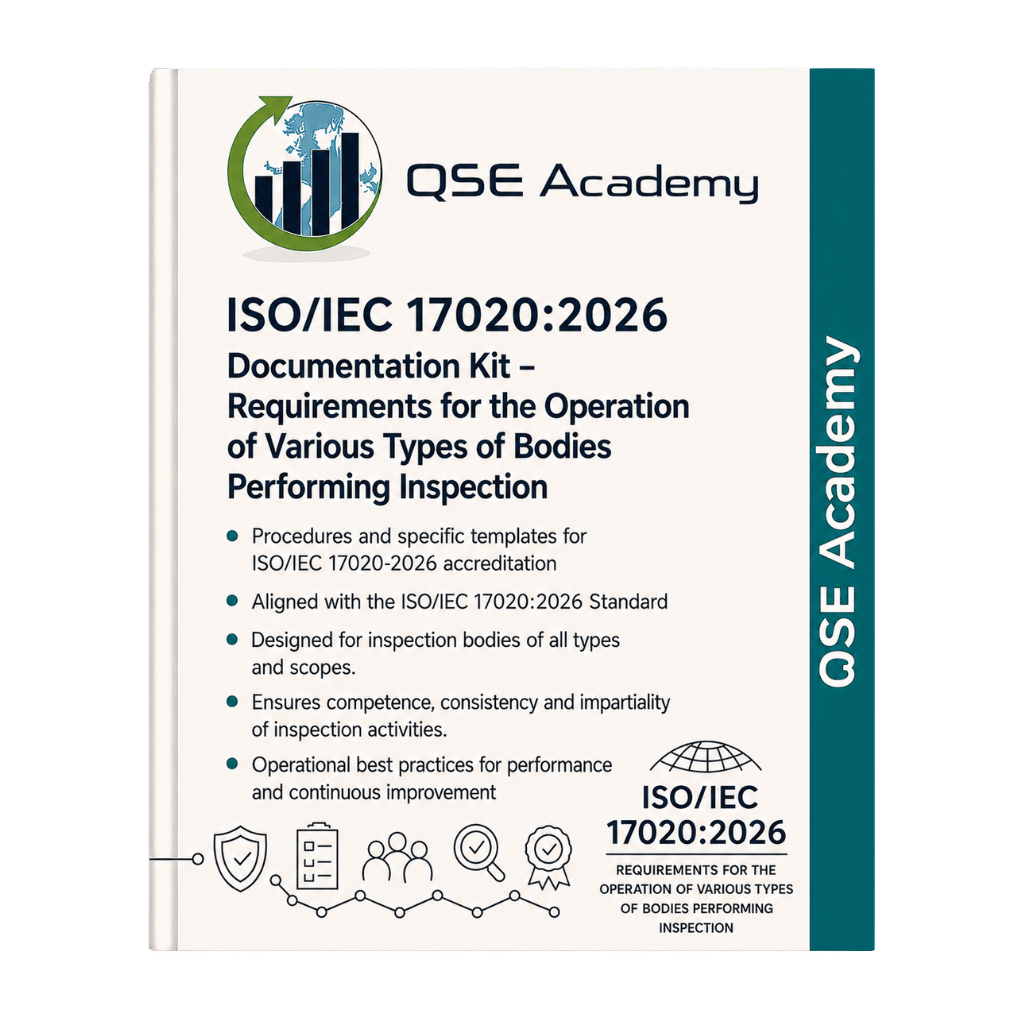
If you would rather start from prepared templates than draft these from scratch, the ISO/IEC 17020:2026 Documentation Kit includes the independence and impartiality documents already structured to the 2026 Annex A, so you adapt them to your classification rather than building them from a blank page.
Where to take this next
Your independence type is one requirement among many, so set it in the context of the whole standard: the clause-by-clause requirements guide walks Clauses 4 to 8 and Annex A in order. If you are reclassifying as part of moving to the 2026 edition, do it alongside the rest of the transition using the transition guide and its dated deadlines. The normative independence text sits in Annex A of the standard itself on the ISO catalogue page, and ANAB summarises the change on the ANSI National Accreditation Board blog.
Type A and Type non-A requirements are set out in the normative Annex A of ISO/IEC 17020:2026. The mapping from the former Type A, B and C is explained here to orient you; make your own classification decisions against the official standard text, activity by activity, and confirm them with your accreditation body.

I hold a Master’s degree in Quality Management, and I’ve built my career specializing in the ISO/IEC 17000 series standards, including ISO/IEC 17025, ISO 15189, ISO/IEC 17020, and ISO/IEC 17065.
My background includes hands-on experience in accreditation preparation, documentation development, and internal auditing for laboratories and certification bodies.
I’ve worked closely with teams in testing, calibration, inspection, and medical laboratories, helping them achieve and maintain compliance with international accreditation requirements.
I’ve also received professional training in internal audits for ISO/IEC 17025 and ISO 15189, with practical involvement in managing nonconformities, improving quality systems, and aligning operations with standard requirements.
At QSE Academy, I contribute technical content that turns complex accreditation standards into practical, step-by-step guidance for labs and assessors around the world.
I’m passionate about supporting quality-driven organizations and making the path to accreditation clear, structured, and achievable.