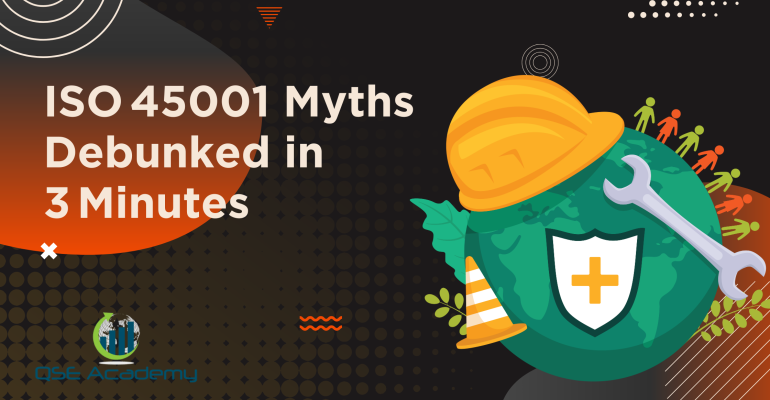
ISO 45001 Myths Debunked in 3 Minutes
Last Updated on December 24, 2025 by
Why ISO 45001 Gets So Misunderstood
Here’s what I’ve noticed after years of helping companies implement ISO 45001.
Most of the resistance doesn’t come from the standard itself.
It comes from assumptions.
People hear things from colleagues, competitors, or outdated blogs—and suddenly ISO 45001 sounds complicated, expensive, or pointless.
Let’s clear that up.
Below are the most common myths I hear from clients before implementation—and what actually happens in real audits.
Myth 1: ISO 45001 Is Only for High-Risk Industries
This one comes up all the time.
Construction? Sure.
Manufacturing? Obviously.
Offices or service companies? “Probably not.”
That thinking is outdated.
ISO 45001 isn’t based on industry labels. It’s based on risk.
Office environments still deal with:
- Ergonomic injuries
- Stress and workload issues
- Remote work risks
- Slips, trips, and mental health concerns
What I see in practice:
Low-risk workplaces often struggle more in audits because they underestimate their risks and don’t document controls properly.
 Myth 2: ISO 45001 Is Just More Paperwork
I hear this one before almost every project.
And honestly, I get it. Many organizations have been burned by paperwork-heavy systems in the past.
But ISO 45001 doesn’t ask for paperwork for the sake of it. It asks for control.
Good systems usually end up with:
- Fewer documents
- Clearer processes
- Less confusion
Here’s the reality:
Auditors care far more about how safety works day to day than how thick your manual is.
Common mistake:
Over-documenting instead of fixing real risks.
Myth 3: ISO 45001 Replaced OHSAS 18001 Without Real Changes
This myth causes the most audit pain.
ISO 45001 is not OHSAS 18001 with a new name.
Yes, many elements carry over. But the thinking changed.
Key differences include:
- Stronger leadership accountability
- Real worker participation
- Risk-based thinking tied to business decisions
What I’ve seen go wrong:
Organizations rename documents, keep the old system, and then get surprised when auditors dig deeper.
Myth 4: Small Businesses Don’t Need ISO 45001
Size has never been the deciding factor.
Risk has.
I’ve worked with small companies that needed ISO 45001 more than large ones—especially when:
- They grew quickly
- Took on contractors
- Started bidding for bigger clients
Real-world pattern:
Small businesses often implement ISO 45001 after an incident, not before. That’s the hard way to learn.
Myth 5: ISO 45001 Guarantees Zero Accidents
This is an unrealistic expectation—and auditors know it.
ISO 45001 doesn’t promise perfection.
It promotes prevention and improvement.
Accidents can still happen. What matters is:
- How risks are identified
- How incidents are investigated
- How lessons are applied
Important clarification:
Auditors don’t expect zero incidents. They expect learning, control, and improvement.
Myth 6: ISO 45001 Certification Means You’re Fully Legally Compliant
This one is risky.
ISO 45001 helps manage legal compliance—but it doesn’t replace it.
You still need to:
- Understand applicable laws
- Meet regulatory requirements
- Respond to changes in legislation
Common pitfall:
Assuming certification protects you from enforcement action. It doesn’t—poor compliance still has consequences.
FAQs – Quick ISO 45001 Reality Checks
Is ISO 45001 hard to implement?
It depends on leadership.
Organizations with engaged leaders usually find it manageable. Those relying on paperwork alone struggle.
Do auditors expect everything to be perfect?
No.
They expect awareness, control, and improvement—not a flawless record.
Conclusion: The Real Truth About ISO 45001
Most ISO 45001 myths come from misunderstanding—not experience.
When implemented properly:
- It’s practical
- It’s flexible
- It improves safety without unnecessary complexity
From what I’ve seen, organizations that focus on real risks—not assumptions—get the most value.
If you’re unsure about ISO 45001, start with facts, not rumours.
A simple gap analysis usually clears things up fast.
Whether it’s ISO 9001, ISO 22000, or the cosmetics-focused ISO 22716, I’ve spent my career I’m not here to call myself an expert—I prefer “enthusiast” because I truly love what I do. When I’m not writing about standards, you’ll probably find me playing Piano 🎹, connecting with people, or diving into my next big project💫. I’m an engineer specialized in the food and agricultural industry
make ISO standards less intimidating and more approachable for everyone.
turning complex jargon into clear, actionable steps that businesses can actually use.
There’s something incredibly rewarding about helping people navigate food safety and quality management systems
in a way that feels simple, practical, and even enjoyable.
I have a Master’s in QHSE management and over 12 years of experience as a Quality Manager
I’ve helped more than 15 companies implement ISO 9001, ISO 22000, ISO 22716, GMP, and other standards
My clients include food producers, cosmetics manufacturers, laboratories, and service companies
I believe quality systems should be simple, useful, and efficient.
Related Posts