
OSHA’s Top 10 Violations (FY2026) and the ISO 45001 Clause That Prevents Each
Preliminary FY2026 and final FY2025 counts for OSHA’s ten most cited standards, and the ISO 45001:2018 clause that…
Read article →Social Responsibility — expert articles, practical resources, and solutions to structure your certification project.
The ISO 26000 standard provides guidance on social responsibility (SR / CSR / ESG). Published in 2010, it is intentionally non-certifiable: it helps organisations integrate social responsibility into their strategy without imposing a single audit framework.
The standard covers 7 core subjects: organisational governance, human rights, labour practices, the environment, fair operating practices, consumer issues, and community involvement and development. It draws on major international references (UN, ILO, OECD).
Although non-certifiable, ISO 26000 is used as a foundation by several recognised evaluation schemes: EcoVadis, B Corp Certification, Sustainalytics, and GRI Standards. It also informs major ESG reporting frameworks such as SASB and the EU CSRD.
The standard targets all organisations seeking to structure their CSR/ESG approach: companies of all sizes and sectors, public bodies, non-profits, NGOs, and government agencies. It is particularly relevant for organisations subject to ESG reporting obligations or supplier ESG requirements.
ISO 26000 helps to structure a credible ESG approach, respond to customer and tender ESG requirements, anticipate SEC climate disclosure and EU CSRD, improve EcoVadis or B Corp scores, and strengthen employer brand and stakeholder trust.
Preliminary FY2026 and final FY2025 counts for OSHA’s ten most cited standards, and the ISO 45001:2018 clause that…
Read article →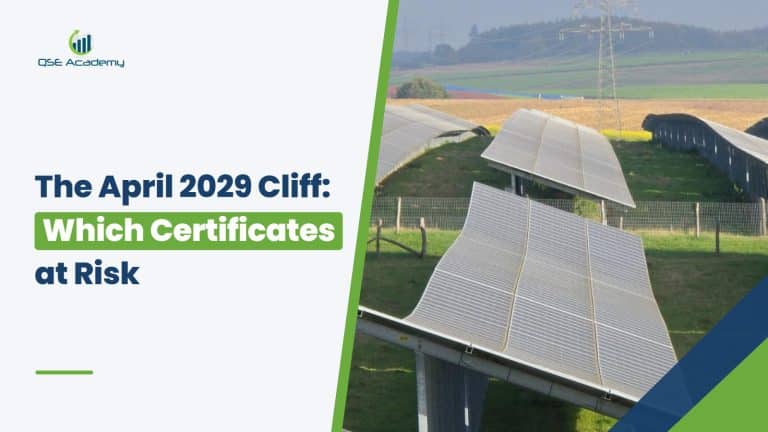
The April 2029 Cliff: Which ISO 14001 Certificates Won’t Survive the Transition Yes, your ISO 14001:2015 certificate will…
Read article →
What the 2026 Climate Scope Really Adds to Your ISO 14001 Audit Bill, Sector by Sector Here is…
Read article →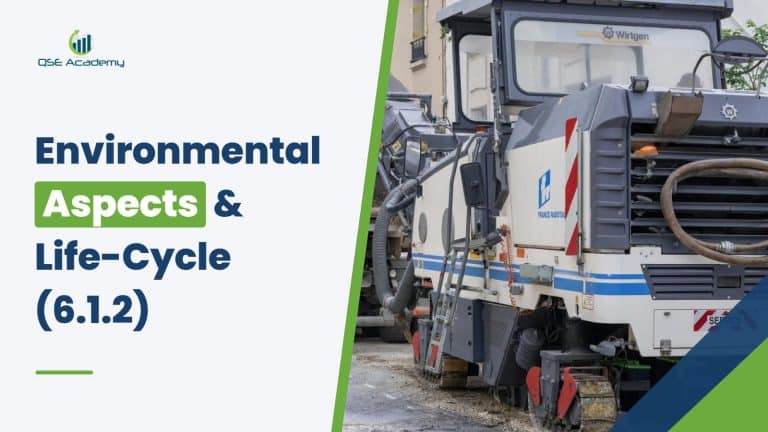
ISO 14001:2026 Environmental Aspects and the Life-Cycle Perspective (6.1.2) Clause 6.1.2 asks you to do three things and…
Read article →
ISO 14001:2026 Clause 6.3 Planning of Changes: A Working Procedure Clause 6.3 of ISO 14001:2026 is one of…
Read article →
ISO 14001:2026 and Climate Change: How to Handle Clauses 4.1 and 4.2 Yes, ISO 14001:2026 requires you to…
Read article →Download the documentation kit or speak with a consultant during a free 30-minute consultation.

QSE Academy supports quality managers, SMEs, and consultants in accelerating their ISO standards implementation through ready-to-use documentation, targeted training programs, custom documentation services, and compliance tools.
Quality Consultants Group LLC
8206 Louisiana Blvd NE,
Ste A #135
Albuquerque, NM 87113
United States
Secure Payment

© 2026 QSE Academy. All Rights Reserved.