
OSHA’s Top 10 Violations (FY2025) and the ISO 45001 Clause That Prevents Each
Final FY2025 counts for OSHA’s ten most cited standards, and the ISO 45001:2018 clause that addresses each one.…
Read article →Automotive Quality System — expert articles, practical resources, and solutions to structure your certification project.
The IATF 16949 standard is the global benchmark for quality management systems in the automotive industry. Published in 2016 by the International Automotive Task Force (IATF), it replaced ISO/TS 16949 and applies on top of ISO 9001:2015.
The standard combines the requirements of ISO 9001 with automotive-specific requirements: core tools (APQP, PPAP, FMEA, MSA, SPC), strong traceability, sub-tier supplier management, and Customer-Specific Requirements (CSRs) from OEMs (Ford, GM, Stellantis, Toyota, BMW, VW, etc.).
IATF 16949 is mandatory to supply automotive OEMs directly or indirectly. It is one of the most demanding certifications in industry, with an enhanced surveillance regime: annual audits, strict major nonconformity rules (immediate suspension is possible).
The standard targets automotive suppliers and sub-suppliers: tier 1 OEM suppliers, tier 2 and tier 3 sub-suppliers, parts manufacturers, raw material suppliers, electronic component suppliers. Pure services (logistics, engineering without production) are out of scope.
IATF 16949 certification is a condition of access to the global automotive market. OEMs strictly require it from their suppliers. Without it, it is impossible to supply Ford, GM, Stellantis, Toyota, BMW, VW, and the vast majority of major automakers.
Final FY2025 counts for OSHA’s ten most cited standards, and the ISO 45001:2018 clause that addresses each one.…
Read article →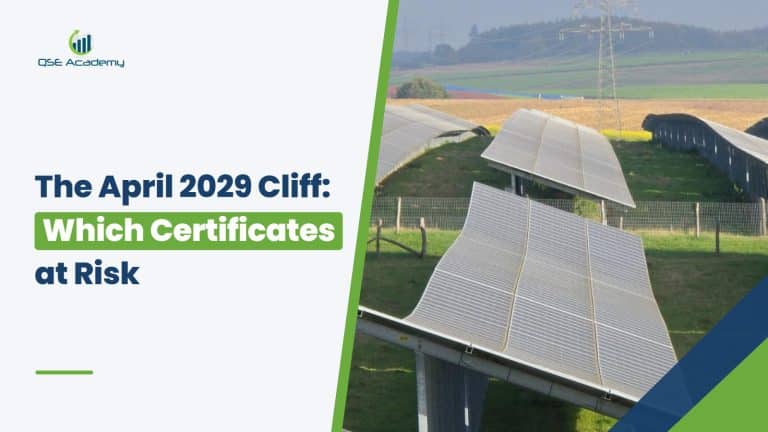
The April 2029 Cliff: Which ISO 14001 Certificates Won’t Survive the Transition Yes, your ISO 14001:2015 certificate will…
Read article →
What the 2026 Climate Scope Really Adds to Your ISO 14001 Audit Bill, Sector by Sector Here is…
Read article →
ISO 14001:2026 Environmental Aspects and the Life-Cycle Perspective (6.1.2) Clause 6.1.2 asks you to do three things and…
Read article →
ISO 14001:2026 Clause 6.3 Planning of Changes: A Working Procedure Clause 6.3 of ISO 14001:2026 is one of…
Read article →
ISO 14001:2026 and Climate Change: How to Handle Clauses 4.1 and 4.2 Yes, ISO 14001:2026 requires you to…
Read article →Download the documentation kit or speak with a consultant during a free 30-minute consultation.

QSE Academy supports quality managers, SMEs, and consultants in accelerating their ISO standards implementation through ready-to-use documentation, targeted training programs, custom documentation services, and compliance tools.
Quality Consultants Group LLC
8206 Louisiana Blvd NE,
Ste A #135
Albuquerque, NM 87113
United States
Secure Payment

© 2026 QSE Academy. All Rights Reserved.