Add us as a preferred source to see our ISO and compliance articles more often in your Google results and Discover.
ISO/IEC 17025 Standard Modification Review
If you’re involved in laboratory testing or calibration, you’ve probably heard about the 2017 revision of ISO/IEC 17025. But what exactly changed—and why does it matter? That’s what this ISO/IEC 17025 Standard Modification Review is all about. Whether you’re updating your management system or just curious about what’s new, understanding the changes in structure, terminology, and approach can make a big difference in how your lab stays compliant and efficient.
In this article, we’ll walk through the key updates introduced in the 2017 version of the standard. This ISO/IEC 17025 Standard Modification Review breaks everything down into clear, manageable sections so you can get up to speed without feeling overwhelmed. Let’s dive in.
Structural Reorganization in the 2017 Version
One of the most noticeable updates in our ISO/IEC 17025 Standard Modification Review is the complete reorganization of the standard’s structure. If you’re used to the older version, you’ll remember it was split into two main parts—management requirements and technical requirements. That format worked for a while, but it didn’t always reflect how labs actually function day to day.
The 2017 revision introduces a much more process-based approach. Instead of dividing the requirements into broad categories, the structure now follows a clearer, more logical progression—more in line with how real lab activities actually unfold.
Here’s what changed in the structure:
The new version is organized into eight sections, starting from scope and ending with management system requirements
It follows the High-Level Structure (HLS) used in other modern ISO standards like ISO 9001
Related topics are grouped together in a way that supports better integration and workflow
Why does this matter? Because part of the ISO/IEC 17025 Standard Modification Review is about making the standard easier to implement and more aligned with how labs operate today. You no longer have to wrestle with separating quality management topics from technical ones—they’re now presented in a flow that makes much more sense in practice.
This reorganization also helps if your lab is already certified to other ISO standards. It means less duplication, smoother integration, and fewer headaches when building or maintaining a single management system.
So, in the big picture of this ISO/IEC 17025 Standard Modification Review, the structural change is more than cosmetic—it’s a meaningful improvement that makes the standard more practical and accessible. Up next, we’ll talk about how the standard moved from focusing on preventive action to embracing a more modern, risk-based mindset.
Risk-Based Thinking and the Elimination of Preventive Action
Another key highlight in this ISO/IEC 17025 Standard Modification Review is the shift from traditional preventive actions to a more forward-thinking approach: risk-based thinking. This change is all about encouraging labs to think ahead and identify potential problems before they happen, instead of just reacting to issues after the fact.
In the older version of ISO/IEC 17025, there was a specific section dedicated to preventive actions. While well-intentioned, it often led to generic procedures that didn’t always add real value. The 2017 revision takes a smarter approach—integrating risk awareness directly into the way decisions are made, processes are designed, and activities are performed.
Here’s how this part of the ISO/IEC 17025 Standard Modification Review plays out in real terms:
Labs are expected to consider risks and opportunities at every step—not just during audits
There’s no longer a need for a standalone “preventive action” document
Risk considerations now appear throughout various clauses, including impartiality, resources, and data integrity
Labs have the flexibility to decide how formal their risk management process should be
For example, if your lab relies heavily on one supplier for critical materials, the risk-based approach would prompt you to think about a backup plan. Or if you’re implementing a new software system, it encourages you to assess how it might affect your reporting accuracy or recordkeeping.
This update in the ISO/IEC 17025 Standard Modification Review helps labs become more proactive, not just compliant. You’re no longer just checking boxes—you’re genuinely thinking through how to maintain quality and avoid disruptions.
By embedding risk-based thinking into daily operations, ISO/IEC 17025:2017 creates a more agile, modern quality framework. And that’s a big win for labs trying to keep up with rapid changes in technology, client needs, and regulatory demands.
Next, let’s explore how the scope of the standard has expanded to include a broader range of laboratory activities—something you’ll definitely want to know about if your lab does more than just testing or calibration.
Expanded Scope and Laboratory Activities
In this part of our ISO/IEC 17025 Standard Modification Review, one of the most notable updates is the expanded scope of the standard itself. The 2017 revision acknowledges that modern laboratories are involved in much more than just basic testing or calibration. Today’s labs often perform sampling, develop methods, provide opinions and interpretations, and even use advanced digital tools—and the updated standard now reflects that reality.
So, what exactly does this scope expansion include? Here’s a quick breakdown:
Sampling is now officially within the scope of the standard. If your lab is responsible for collecting samples before testing, ISO/IEC 17025:2017 expects that process to be controlled and documented just like everything else.
Opinions and interpretations can now be reported, as long as the lab has the technical competence to do so—and it’s clearly agreed with the client.
The definition of laboratory activities is broader and more inclusive, recognizing that labs work in diverse environments with a variety of services that go beyond traditional lab settings.
This part of the ISO/IEC 17025 Standard Modification Review matters because it gives labs the flexibility to define the scope of their activities more accurately. If your lab does environmental sampling in the field, or supports clients by interpreting test results, those services are now clearly recognized and covered by the standard.
And the language used in the revised standard is intentionally more flexible too. It no longer forces every lab to follow a one-size-fits-all model. Instead, the requirements can be adapted to suit the type of lab, the nature of its work, and the context in which it operates.
This wider scope is a great example of how the ISO/IEC 17025 Standard Modification Review brings the standard into alignment with today’s laboratory practices. Labs aren’t static—they evolve with client demands, technology, and industry expectations. And now, the standard does too.
Next up, we’ll take a closer look at how impartiality and confidentiality have been strengthened in the 2017 revision—two essential topics that every lab needs to get right. Let’s dig in.
ISO/IEC 17025 Standard Modification Review of Impartiality and Confidentiality
Now let’s talk about a really important part of the ISO/IEC 17025 Standard Modification Review—how the 2017 version places a stronger focus on impartiality and confidentiality. These two elements aren’t just checkboxes; they’re at the heart of trust in laboratory work.
In the previous version, these topics were certainly present, but the 2017 update gives them a more central role. Why? Because clients need to trust that your lab’s results are unbiased and that their sensitive information is protected—no matter what.
Here’s what changed in terms of impartiality:
Labs are now required to identify, evaluate, and manage risks to impartiality
This isn’t limited to obvious conflicts of interest—it includes organizational, financial, and even personal pressures
The standard calls for evidence that impartiality is being protected in real, everyday situations
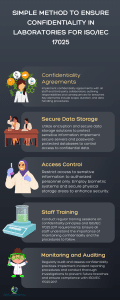
As part of this ISO/IEC 17025 Standard Modification Review, confidentiality gets a more modern treatment too. The updated standard takes into account:
Data protection practices, especially for digital records and cloud systems
Who can access what, and how that access is controlled
The need to inform clients when legal or regulatory bodies require disclosure
What’s great about these updates is that they go beyond theory. The standard encourages labs to actually think about how impartiality and confidentiality can be compromised—and to build procedures that prevent that from happening.
For example, if a technician is asked to test a product made by their own company, that’s a clear risk to impartiality. Or if client reports are being stored in shared folders without password protection, that’s a confidentiality issue. Under the 2017 version, you’re expected to catch those problems before they cause real damage.
This part of the ISO/IEC 17025 Standard Modification Review really shows the standard’s shift toward proactive thinking. It’s no longer enough to say you’re impartial—you need to show how you ensure it, every day.
Next, we’ll move into a section that offers something new to labs: management system options. If you’ve ever wondered how much structure you really need, this part will be especially helpful.
Management System Options Introduced
Here’s a refreshing twist in the ISO/IEC 17025 Standard Modification Review—labs now have options when it comes to how they manage their quality system. The 2017 version introduces two distinct approaches, giving you the flexibility to choose the one that works best for your lab’s structure, size, and existing practices.
Before this revision, ISO/IEC 17025 had a pretty rigid view of how a management system should look. But in today’s diverse lab environments, not everyone operates the same way—and this change finally reflects that reality.
Let’s break down what this part of the ISO/IEC 17025 Standard Modification Review is all about:
Option A allows labs to follow the specific clauses outlined in the standard for managing documents, handling complaints, conducting internal audits, and reviewing management activities.
Option B is designed for labs that already operate under a recognized management system—like ISO 9001. In this case, you don’t need to duplicate requirements. Instead, you demonstrate that your system supports the goals of ISO/IEC 17025.
Both options still require you to meet all technical and quality requirements of the standard. The difference is in how you document and demonstrate your compliance.
This flexibility is a big win, especially for labs that are already part of larger organizations with established systems. You don’t have to start from scratch—you just need to ensure your existing setup meets the intent of ISO/IEC 17025.
So, in this part of the ISO/IEC 17025 Standard Modification Review, the takeaway is clear: it’s not about one-size-fits-all. It’s about giving labs the freedom to operate efficiently, without compromising the integrity or consistency of their results.
Up next, we’ll look at the final technical refinements made in the 2017 revision—including changes in terminology that help make the standard more consistent and easier to understand across the board. Let’s keep going.
Technical Changes and Terminology Updates
Let’s wrap up the core part of our ISO/IEC 17025 Standard Modification Review with a closer look at the technical tweaks and terminology updates introduced in the 2017 version. These changes might seem small on the surface, but they make a big difference in clarity, consistency, and how the standard connects with other ISO frameworks.
One of the first things you’ll notice is that many familiar terms have been updated. The goal was to align ISO/IEC 17025 more closely with other standards—like ISO 9001 and ISO/IEC 17020—so that integrating systems or cross-referencing requirements becomes much smoother.
Here are a few of the more notable terminology updates in this ISO/IEC 17025 Standard Modification Review:
“Laboratory” is now used more flexibly to refer to all types of facilities performing testing, calibration, or sampling—not just traditional lab spaces
“Decision rules” have been added to clarify how labs should handle statements of conformity (like pass/fail results), especially when there’s measurement uncertainty involved
“Verification” and “validation” are more clearly defined and distinguished—helping avoid common confusion when applying methods or confirming performance
“Traceability” now includes a stronger connection to metrological traceability, emphasizing the role of national or international standards in calibration
Another point worth noting in this ISO/IEC 17025 Standard Modification Review is the shift toward more outcome-based language. Instead of prescribing how something must be documented or performed, the standard focuses more on what needs to be achieved. That means labs have more freedom to decide how they meet the requirements, as long as the intent and quality are there.
These small but meaningful changes help reduce ambiguity, support more consistent interpretations during audits, and give labs clearer guidance without unnecessary rigidity.
So if you’re updating your procedures, training materials, or internal documentation, this is a great time to align your language with the updated standard. It’s not just about using the right terms—it’s about making sure your system speaks the same language as your assessors, your clients, and your team.
Next, we’ll bring everything together with a quick recap of the most impactful updates in this ISO/IEC 17025 Standard Modification Review and why they matter so much in today’s lab environment. Let’s finish strong.
Final Recap of ISO/IEC 17025 Standard Modification Review
We’ve covered a lot of ground in this ISO/IEC 17025 Standard Modification Review, and by now, you can probably see how the 2017 revision wasn’t just a routine update—it was a complete rethinking of how the standard supports modern laboratories.
From structure to terminology, from risk-based thinking to data integrity, each change was designed to make ISO/IEC 17025 more relevant, more flexible, and more in tune with how labs actually operate today. It’s no longer just about checking boxes or maintaining endless documentation—it’s about building a system that reflects how your lab works and what your clients need.
Let’s quickly recap the most impactful updates we covered in this ISO/IEC 17025 Standard Modification Review:
A new process-based structure that flows more naturally with real lab activities
A broader scope that includes sampling and opinion-based services
Stronger emphasis on impartiality and confidentiality, with built-in risk controls
Clear management system options, offering flexibility for labs with or without ISO 9001
Updated technical terminology, aligned with modern practices and other ISO standards
The bottom line? This ISO/IEC 17025 Standard Modification Review shows how the 2017 version sets a stronger, smarter foundation for quality, competence, and trust. If your lab is still transitioning or just reviewing its current system, now is the perfect time to use these changes as a roadmap for improvement.
Keep this guide handy as a reference, and you’ll be better prepared for audits, better aligned with industry best practices, and better equipped to meet the evolving demands of your clients.
Let me know if you’d like this content adapted into a video script, checklist, or downloadable resource—I’m happy to help you extend its reach!
I hold a Master’s degree in Quality Management, and I’ve built my career specializing in the ISO/IEC 17000 series standards, including ISO/IEC 17025, ISO 15189, ISO/IEC 17020, and ISO/IEC 17065.
My background includes hands-on experience in accreditation preparation, documentation development, and internal auditing for laboratories and certification bodies.
I’ve worked closely with teams in testing, calibration, inspection, and medical laboratories, helping them achieve and maintain compliance with international accreditation requirements.
I’ve also received professional training in internal audits for ISO/IEC 17025 and ISO 15189, with practical involvement in managing nonconformities, improving quality systems, and aligning operations with standard requirements.
At QSE Academy, I contribute technical content that turns complex accreditation standards into practical, step-by-step guidance for labs and assessors around the world.
I’m passionate about supporting quality-driven organizations and making the path to accreditation clear, structured, and achievable.
Take the next step
Prepare your ISO/IEC 17025 certification with the complete kit
The complete documentation package to deploy an ISO/IEC 17025:2017-compliant laboratory management system: ready-to-use document architecture covering competence, methods, metrological traceability, uncertainty, and statements of conformity.